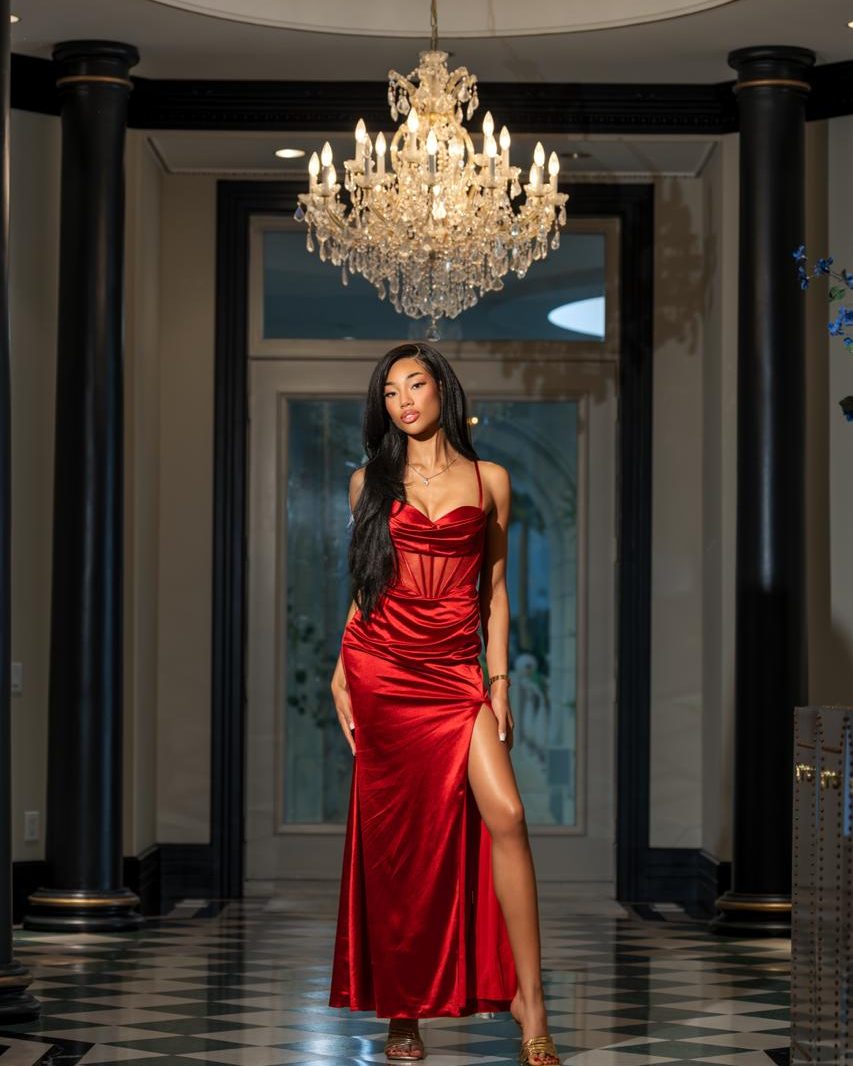
Editorial portrait photographer in Toronto is a phrase that gets applied loosely, often to describe photography that is simply stylized or creative rather than technically functional. I want to be precise about what it actually means, because the distinction matters, especially when you're a business leader or creative professional deciding how your portrait should represent you.
I've contributed photography to Harper's Bazaar in 2024 and 2025, in collaboration with Unik Models. That's a specific credential with specific implications for what the editorial standard looks like in practice, and it's directly relevant to every portrait session I conduct for clients in Toronto, regardless of the context. I was also the founding contributor and Creative Director at Spencer Magazine from 2019 to 2024, four years of producing photography under editorial standards for a published magazine. I was named Fashion Photographer of the Year by Niagara Canada International Fashion Week in 2025. And I've shot at New York Fashion Week.
I tell you this because when I talk about editorial portrait photography, I'm not describing an aesthetic preference. I'm describing a standard I work to every time I pick up a camera.
What Editorial Photography Actually Means (And What It Doesn't)
"Editorial" is not a synonym for moody lighting or artistic processing. The word describes a standard of technical and aesthetic rigor developed specifically for the world's most demanding publishing environments. When an image is going to print in a global magazine, as mine have, in Harper's Bazaar. It has to survive scrutiny at a level that most digital photography is never subjected to. Color accuracy, compositional grammar, resolution, the relationship between the subject and the environment, all of it is evaluated with a precision that the Instagram scroll doesn't demand. Contributing to Harper's Bazaar means working within a visual context where the bar is set by images that are going to sit alongside editorial work from some of the most skilled photographers in the world. That context is not forgiving of approximations or near-misses. It demands intention in every element of the frame: light, colour, composition, expression, environment, the relationship of the subject to all of the above. Four years as Creative Director at Spencer Magazine gave me a parallel discipline: producing editorial content under deadline, maintaining visual consistency across issues, and developing a point of view that was identifiable as belonging to the publication. That's a different skill from executing a single strong image. It's the skill of building a body of work. The editorial mindset applied to portraits means treating every element of the image as a choice, not an accident. Where the subject stands in the frame isn't default. It's considered. What the light does to the subject's features isn't whatever the room provides. It's shaped. The expression isn't what the subject defaulted to when they heard the shutter. It's the result of direction. What this mindset does for photographers who've internalized it is significant: it makes them substantially better at every category of portrait work, because the editorial standard is higher than the standard required for most other applications. A photographer trained to produce images for print in Harper's Bazaar is ready for anything a corporate portrait, executive headshot, or brand photography session demands.
The Harper's Bazaar Standard: What It Taught Me About Portraiture
Shooting for print versus shooting for digital screens involves technical differences that are often invisible to the casual viewer but immediately apparent to anyone who's worked in both contexts. The resolution requirements for full-bleed magazine print are orders of magnitude higher than for a website header or an Instagram post. Color grading for print requires an understanding of how digital color values translate to ink on paper, a relationship that demands precision and experience. My Harper's Bazaar work was produced in collaboration with Unik Models, a partnership that placed me in editorial fashion photography at the level where the subjects, the art direction, and the final placement all matched the standards of a publication read by millions of people globally. The fashion and portrait work produced in those collaborations in 2024 and 2025 is the clearest example I can point to of what the editorial standard looks like in practice. Compositional grammar is the term I'd use for the set of visual conventions that editorial photography follows: how subjects are framed in relation to negative space, how the eye is guided through the image, how foreground, midground, and background relate to each other to create depth. These conventions exist because they've been refined over decades of professional publishing, and they produce images that hold up under scrutiny in a way that casually composed snapshots don't. New York Fashion Week is its own kind of editorial education. The pace is relentless, the subjects are moving, and the standard for what constitutes a usable image is set by the strongest fashion photography being produced anywhere in the world. Working in that environment rewires your instincts in ways that controlled studio work doesn't, you get faster, more decisive, and more precise about what you need from every frame. The role of styling and art direction in producing an extraordinary portrait versus an adequate one cannot be overstated. The difference between a portrait that reads as editorial and one that reads as a standard professional photograph is often the attention given to elements that have nothing to do with the camera: the specific garment worn by the subject, the colour of the wall behind them, the props or context objects in the frame, the deliberate art direction of every element in the composition.
Applying the Editorial Approach to Toronto Business and Executive Photography
What I bring to every portrait session in Toronto, whether it's a C-suite executive headshot, a founder portrait for a media feature, or a personal branding shoot, is the editorial principle that every frame is a statement. Not a documentation of how someone looks today, but a constructed image that communicates how they want to be understood. This means treating every client's portrait as though it were going on the cover of a relevant publication, because in their industry and their market, it effectively is. A portrait that appears in a Globe and Mail feature, a speaking engagement bio, an investor deck, or an annual report is operating in a public context where the standard is set by the best photography that audience has seen. Generic corporate portraiture doesn't survive that comparison. Location scouting with an editorial eye means finding architecture, light, and environmental context in Toronto that adds meaning to a portrait rather than simply providing a backdrop. The city has extraordinary visual material, specific neighborhoods, buildings, public spaces, and architectural environments that communicate different things about a subject depending on which one you choose and how you use it. I scout with intention, not convenience. The distinction between a headshot session and a portrait session is creative latitude. A headshot session has a clear functional deliverable: a professional, flattering photograph that reads well in small sizes on digital profiles. A portrait session is an opportunity to produce something more ambitious, an image that tells a story, communicates a perspective, and represents the subject in a way that is both accurate and compelling. The editorial approach is what makes the latter possible.
Who This Approach Is For
C-suite executives and founders who need imagery for media and investor relations are the clearest fit for editorial portrait photography. These are contexts where the photograph is going to be evaluated by sophisticated audiences who make judgments about the subject's credibility, confidence, and seriousness partly based on the quality of the image. Authors, speakers, and thought leaders building a personal brand need portraits that communicate depth and intelligence, images that position them as the person worth listening to. A photography approach that treats the portrait as a genuine work of craft, not a functional deliverable, produces the images that serve this positioning. Creative professionals face a specific challenge: their photography needs to communicate creativity and quality simultaneously. A photographer with a weak portfolio communicating "trust my taste" is unconvincing. Working with a photographer whose images appear in Harper's Bazaar addresses this directly. Organizations producing annual reports, brand campaigns, or PR materials where photography cannot look generic are the institutional version of the same need. When the imagery represents an organization to its stakeholders, investors, donors, partners, media, the standard has to match the organization's own standard of excellence.