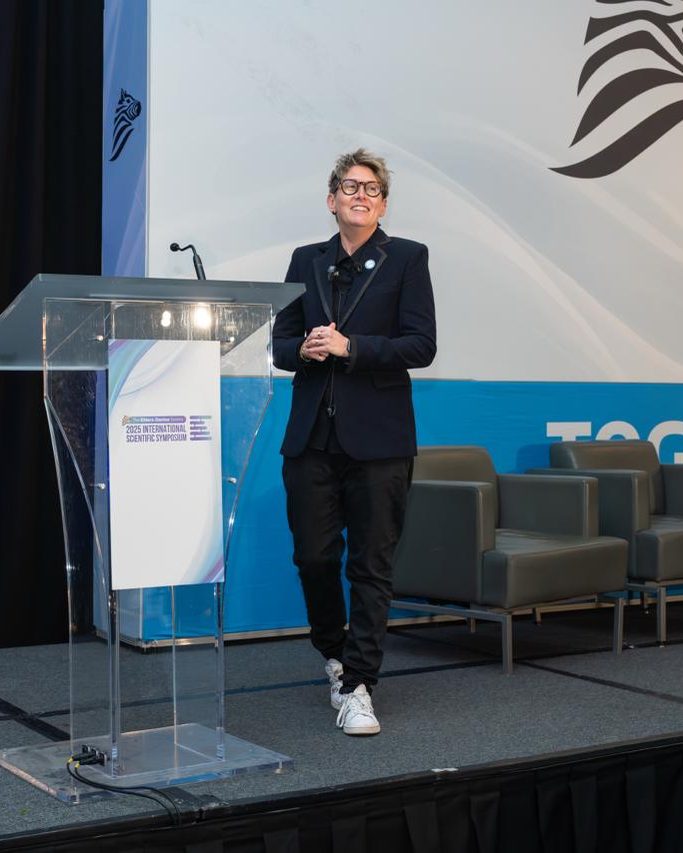
Conference photographer in Toronto means different things depending on who you ask and what they've actually done. There's a wide range of capability and experience in this category, and the gap between one end of it and the other is not theoretical. It shows up in the gallery, in the on-site presence, and in the ability to deliver consistent quality across multiple consecutive days without the work deteriorating.
In 2025, I was the photographer for the Ehlers-Danlos Society International Conference, a five-day gathering of clinicians, researchers, patient advocates, and organizational leadership from across the world. The EDS Society is a global medical nonprofit with chapters in more than thirty countries, representing a patient community that has historically struggled to be recognized by the medical establishment. This conference brings together the people working to change that: the researchers advancing diagnostic criteria, the physicians developing treatment protocols, the patient advocates fighting for systemic recognition.
I didn't get this assignment because I had a good portfolio reel. I got it because the organization needed a photographer with the institutional credibility and multi-day stamina to represent their work to the world, and the work I'd done with Rémy Martin's exclusive events, with Miss Universe Canada across three consecutive years, at the SickKids Foundation Fired Up Gala, and across Toronto's highest-profile event circuit had demonstrated exactly that.
Covering the EDS conference properly was one of the most demanding assignments I've taken on. Here's what that actually looked like.
Not All Conferences Are Created Equal: And Neither Are All Conference Photographers
A one-day corporate summit and a five-day international medical conference are not the same category of work. The logistical scale is different. The stakeholder complexity is different. The physical demands are different. The editorial judgment required is different. And the institutional expectations, what the organization needs from the photography, and how they plan to use it, are entirely different. A multi-day conference of this kind involves multiple room formats running simultaneously and in sequence. Plenary halls with stage lighting and large audiences. Breakout sessions in standard meeting rooms with fluorescent overhead fixtures. Poster presentation areas with completely different visual environments and energy. Networking functions in lobby spaces where the light is mixed, the movement is unpredictable, and the most meaningful conversations happen in corners. Opening galas and closing ceremonies with their own distinct visual language and emotional register. Each of these environments requires a different technical approach. The exposure settings that work in a plenary auditorium are wrong for a breakout session. The positioning and framing that produces strong images in a structured keynote speech is counterproductive during an informal networking reception. The photographer who shows up with a single approach and applies it across all five days and all room types will produce inconsistent, technically compromised work. Beyond the technical complexity, multi-day events demand something that can't be faked: sustained engagement. A conference photographer who delivers excellent work on Day 1 and coasts through Days 3, 4, and 5 produces a gallery where the quality drops visibly and inexplicably. The EDS Society, which uses their conference photography in annual reviews, donor communications, research funding materials, and future event promotion, needed the entire gallery to hold up. Not just the highlights from the first morning. The EDS Society did not choose their conference photographer casually. The imagery produced at this event represents the organization to the world: to its global membership, to research funders, to medical professionals considering whether to engage with the society's work, and to the media that covers developments in rare disease medicine. That level of scrutiny shaped every decision I made during the week.
Inside the Ehlers-Danlos Society International Conference: What Five Days Actually Looks Like
The EDS Society International Conference is not a local event that happens to be large. It is a genuinely international gathering, clinicians flying in from Europe, researchers from academic medical centers across North America, patient advocates who have organized their entire year around being in this room for these five days. The scale of what it means to those attendees is immediately apparent from the first morning. Day 1 is not the warmup. The images captured in the opening hours, the registration desk filling with arrivals, the pre-conference workshop sessions, the first keynote in the plenary hall, the cocktail reception where people who communicate exclusively through email and video calls finally meet in person, these are images that end up in the organization's communications for the next twelve months. The visual narrative of the entire conference begins in those first hours, and it has to be strong from the start. The room diversity across five days requires rapid, constant technical adaptation. One hour: a packed plenary auditorium with theatrical stage lighting, a speaker at a podium, an audience of several hundred clinicians and researchers giving their full attention. Next hour: a breakout room with twenty people, overhead fluorescent light, someone presenting slides on a projected screen. After that: a poster session in a large open area, with dozens of researchers standing beside their printed research, in conversation with colleagues who are reading the work over their shoulders. Each transition requires a reset, exposure, white balance, positioning, approach. The human dimension of a medical conference like EDS is unlike anything in the corporate event calendar, and it's where the photography has to hold the most. There are patients in this room alongside the doctors studying their condition. Ehlers-Danlos syndrome is a connective tissue disorder that affects multiple body systems and has historically taken years, sometimes decades, to diagnose correctly. For patients in that room, the conference represents something significant: the validation of an experience that medicine dismissed for too long, the sight of serious researchers taking their condition seriously, the possibility of treatments and recognition on the horizon. The moment a researcher presents a clinical breakthrough to an audience that includes people living with the condition being studied is not a photo opportunity. It's a human moment that requires photographic judgment, the restraint to let the moment exist, the presence to capture what it means, and the discretion to choose images that honor the gravity of the occasion. That kind of editorial judgment cannot be taught in a single event. It develops over years of working in complex, human-centered environments. I've built that judgment across fourteen years of portrait, editorial, and event work, from the exclusive rooms at Rémy Martin's events to the production floor of Miss Universe Canada to the international stage at the EDS conference. Over five days, the deliverable is not a highlight reel. It is a comprehensive visual record: plenary sessions documented in full, breakout sessions represented proportionally, poster presentations covered with enough specificity that researchers can see their work in the gallery, networking functions captured with the natural candid quality that makes them useful for future promotion, and the formal opening and closing ceremonies documented with the care they deserve.
The Skills That Separate Multi-Day Conference Photographers from Single-Event Shooters
Pacing without compromise is the foundational discipline. Day 4 of a five-day conference cannot look worse than Day 1. The physical reality of conference photography, standing for ten to twelve hours, moving between rooms, carrying equipment, maintaining creative engagement when the schedule never relents, requires a specific kind of physical and mental stamina that photographers who primarily shoot controlled studio or location work may not have developed. Managing energy deliberately across five consecutive days, knowing when to push and when to conserve, how to stay technically sharp when the body is fatigued, is a skill that develops through experience. Institutional fluency is the ability to understand how a major nonprofit or academic organization uses its photography and to let that understanding shape every decision on the ground. The EDS Society doesn't need a highlight reel. They need a comprehensive visual record that serves their annual report, their donor appeals, their membership communications, their media outreach, and their promotion of next year's conference. Knowing that shapes which rooms I prioritize, which moments I hold for, which subjects I make sure are represented in the gallery. I'm not just covering moments. I'm building an asset library for an organization. Discretion and environmental awareness are requirements in a medical conference context. Sensitive conversations happen in the hallways. Patients share personal medical histories with clinicians. Researchers discuss unpublished findings in real time. A conference photographer in this environment has to know what to photograph and what to leave alone. That judgment is as important as any technical skill. Adaptability under briefing changes is the practical reality of every multi-day conference. Sessions run long, rooms change, VIPs arrive unannounced. The conference photographer who absorbs these changes without disruption and without compromising the shot list is the one who gets called back next year. Consistency of edit across hundreds of images is the post-production challenge that distinguishes professional multi-day conference coverage from everything else. A conference of this scale produces thousands of raw captures. The editing pass has to be consistent in tone, colour, contrast, and quality across an entire week of work in varying conditions. The final gallery has to read as a single body of work. Achieving that level of consistency at high volume requires both technical systems and genuine discipline.
What the EDS International Conference Credential Means for Toronto Event Organizers
Covering the Ehlers-Danlos Society International Conference places BYJonathanLevy Media in a specific tier of conference photographers operating in Canada: those who have demonstrated capacity for large-scale, multi-day, international institutional events at the highest level of expectation. My event portfolio extends across the full spectrum of Toronto's major event categories. The SickKids Foundation Fired Up Gala at The Ritz-Carlton. The Rémy Martin 300-year anniversary at the Hazelton Hotel. The Miss Universe Canada national pageant across three consecutive years. Credentialed press coverage at international events. Five days at the EDS International Conference. Each of these represents a different kind of institutional trust, and that trust is available to your event. For organizations in Toronto planning medical conferences, academic symposia, legal conferences, technology summits, professional association gatherings, and any multi-day institutional event: the EDS credential is direct evidence. Not a claim about capability. Evidence that this level of work, five days, international scale, multiple simultaneous room formats, complex human dimensions, high institutional expectations, has already been done, at this scale, for this calibre of organization, with results that the organization used in their permanent communications. Toronto hosts dozens of major conferences annually across medicine, law, finance, academia, and technology. The differentiating question to ask any photographer you're considering: What is the largest, most logistically complex, and most institutionally demanding event you have covered? For BYJonathanLevy Media, that answer is a five-day international medical conference for a global nonprofit representing a patient community across thirty-plus countries, an event where the photography entered the permanent record of an organization whose work matters. That answer is available for your event.