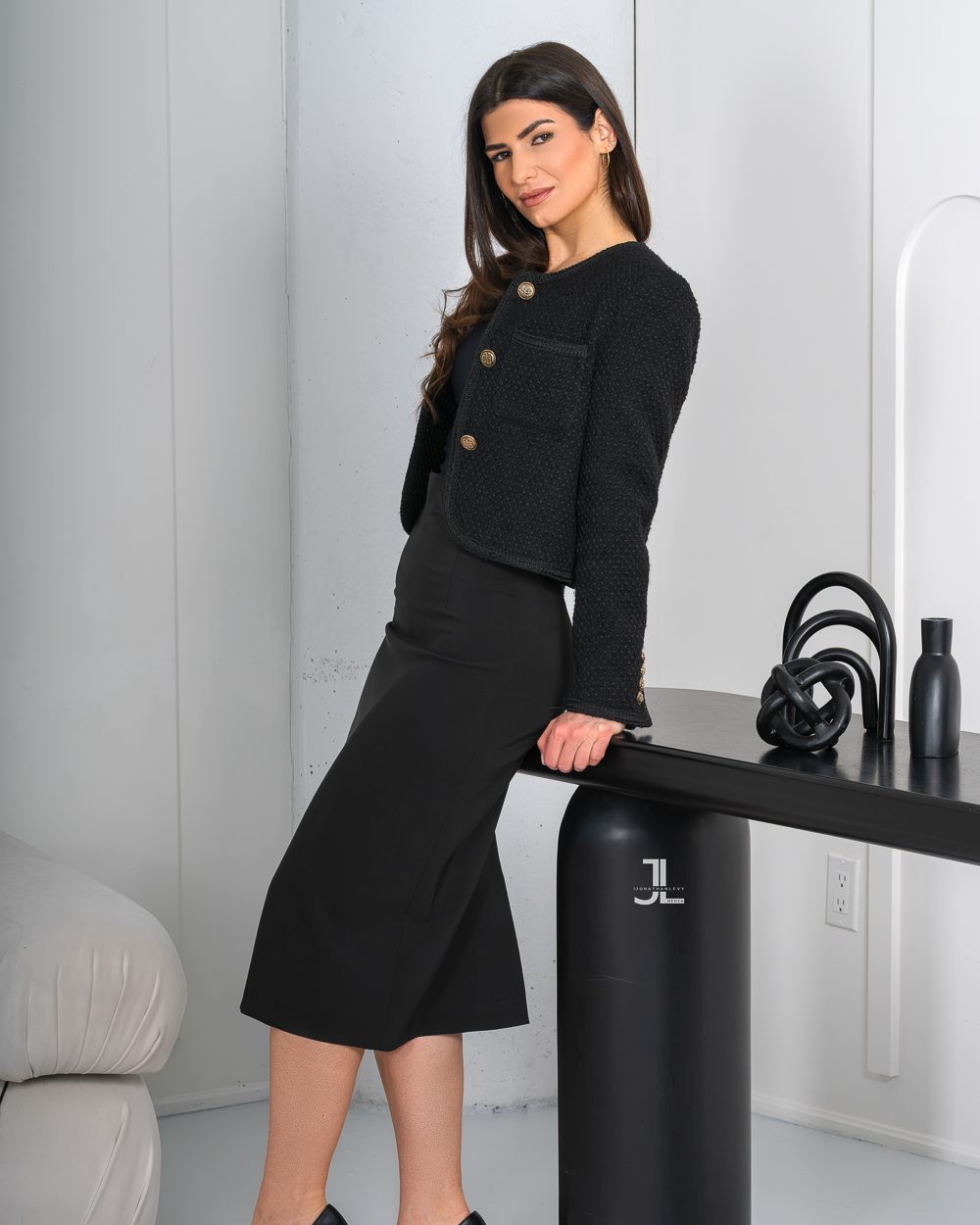
A fashion shoot is decided before anyone picks up a camera. By the time the model is in the chair, most of what determines the pictures has already been settled, or hasn't, and you're paying for the difference by the hour.
If you're a designer or a brand looking for a fashion photographer in Toronto, the question you'll get asked first isn't about equipment. It's about the brief. This is what a good one covers.
Lookbook, Campaign or Editorial: Know Which One You're Buying
These get used as if they mean the same thing. They don't, and the difference changes the shoot. A lookbook shows the collection. The clothes are the subject, and the images have to help someone decide what to buy or stock. Consistency matters more than surprise. The same light, the same crop logic and enough clear frames of each garment that a buyer can see the cut, the fabric and the fit. A campaign sells an idea. The clothes are still there, but the images carry a mood, a character or a world the brand wants to be associated with. There are usually fewer frames and more of them are built to stand alone. Editorial is made for a publication, with the publication's own audience and rules. It gives the photographer the most room and the brand the least control. Most brands need a mix, and that's fine. But say which one is the priority. A photographer who thinks they're shooting a campaign will spend time on atmosphere that a lookbook doesn't need. One who thinks they're shooting a lookbook will make sure every stitch is visible and forget to make anyone feel anything.
Start With Where the Images Will Live
Write down every place the images have to work. A website header. A product page. An Instagram grid. A wholesale line sheet. A print piece. A billboard, if you're that lucky. This matters because each place asks for a different picture. A website header is wide and needs empty space for text. A product page wants a clean, consistent crop. A social post is usually square or vertical and has to read at thumbnail size. If nobody tells the photographer, they'll shoot the frame they find most beautiful, and you'll be cropping it into something it wasn't built to be. Say how many looks you're showing and how many frames you need of each. A realistic count of looks is the single most useful number in the brief.
Bring References, Then Explain Them
Every good brief has references. Photographs, films, paintings, other brands' campaigns. Send them. But a folder of images isn't a brief on its own. What matters is what you like about each one. It might be the light, the colour, the distance between the camera and the subject, or how relaxed the model looks. Two people can point at the same image for opposite reasons. One line per reference saves an hour of discussion on the day. Also tell the photographer what you don't want. It's often the faster way to find the look.
Casting and Talent
Decide who's in the pictures and how they're found. Agency models, friends of the brand, the founder, the team. Each works, and each has a cost and a set of expectations. Agency models arrive experienced, know how to move in a garment and usually take direction quickly. Non professional talent brings something real but needs more time and more encouragement. Either way, the pictures depend on the person in front of the lens feeling confident, and that comes from how the set is run. A photographer who can direct talent matters more than most brands realize. A stiff model makes a beautiful garment look flat. A relaxed one makes it look like it belongs to them. Confirm the details early. Sizes against the samples, availability across the full day, and who's approving the final casting.
Styling, Hair and Makeup, and the Garments Themselves
Who's styling the shoot? If it's a stylist, get them into the brief early. They'll want the references, the look count and the samples well before the day. If it's the brand doing its own styling, someone needs to own that job, because the photographer can't shoot and steam a dress at the same time. Garments need to arrive pressed, in the right sizes, with alternates. A hem that's off, a sample that doesn't fit the model or a missing accessory costs more time on set than almost anything else. Bring backups where you can. Hair and makeup are part of the picture. Decide the direction with the references, and book the artists for the full day, not just the first look. In the world of fashion, the set has more people on it than most shoots, and the pictures improve or fall apart on how well that room is run. I've worked inside that world as a contributing photographer for Harper's Bazaar in 2024 and 2025, and as founding contributor and Creative Director of Spencer Magazine. The photographer's job on a fashion set is to keep the pace up and keep the frame honest to the brief, so the talent doesn't go flat waiting.
Studio or Location
A studio gives you control. The light is the same at nine and at four, and nothing rains. It's the right choice for a lookbook with a lot of looks and a need for consistency. A location gives the clothes a place to live. It adds texture, story and a sense of scale, and it costs you control. Light changes, permits may be needed and every move takes longer. Neither is better. The choice depends on what the images are for, and it should be made early, because it changes the schedule, the crew and the risk.
Usage: What You're Actually Licensing
This is the part brands skip and then regret. Usage is where the images will run, for how long, and in which territories. Social and website use, wholesale, print, paid advertising, out of home. Each can be treated differently, and a wider use usually costs more than a narrow one. Decide what you need now and what you might need in a year. It's much easier to agree it in the brief than to renegotiate once a picture is working well in an ad.
What Drives a Fashion Photography Quote
People ask how much a fashion photographer costs and expect a number. The honest answer is that the number depends on the brief, and the brief is what this post is about. The main drivers are the number of looks, the number of finished images, the length of the day, the size of the crew, talent and location costs, the level of retouching, how the images will be used and how fast you need them. A ten look lookbook in a studio is a different job from a campaign on location with a full team. At BYJonathanLevy Media, fashion projects are quoted on scope, and a written brief is provided and reviewed before the shoot date is confirmed.
Delivery
Ask how many images you'll receive, whether they're retouched, and when. Retouching for a lookbook is different from retouching for a campaign, and the final use should decide it. Edited selects are delivered within 72 hours, and earlier delivery is available on request. Get the date in writing. Then you can plan the launch around it.